The Midlands Borderlands: A Solar Overview
Shropshire and Stoke-on-Trent occupy a fascinating geographical and economic middle ground — rural market towns, historic county towns and former industrial cities, all within striking range of the West Midlands and North West conurbations. Both areas receive around 950–1,050 kWh/m² of annual solar irradiance — solidly mid-table for the UK and more than sufficient to make solar a sound long-term investment.
Shropshire: Rural Solar at Its Best
Shropshire is England's largest inland county and one of its least densely populated. The combination of large detached rural properties, agricultural buildings and a prosperous market town commuter belt makes it one of the strongest solar markets outside the major cities. Average house prices significantly above the national average — particularly in the affluent south Shropshire villages and around Ludlow — mean homeowners have both the assets and the motivation to invest in premium solar systems.
Shrewsbury, the county town, has a substantial Victorian and Edwardian housing stock. The town's loop within the River Severn creates natural elevation changes, and many properties on the southern slopes of Belvidere, Monkmoor and Meole Brace face broadly south — optimal for solar. The town centre conservation area (one of England's most extensive Victorian conservation designations) means properties in the loop require careful pre-application checks before installing.
Telford, by contrast, is a New Town built from the 1960s onward. Its planned estates — Dawley, Madeley, Stirchley, Brookside — feature standardised housing with consistent south-facing rear gardens. Telford and Wrekin Council has been proactive on ECO4 delivery and has a local energy advice service. Ironbridge Gorge, birthplace of the Industrial Revolution, sits within Telford and Wrekin's authority — conservation area rules apply to the gorge villages themselves, but the wider Telford estates are unrestricted.
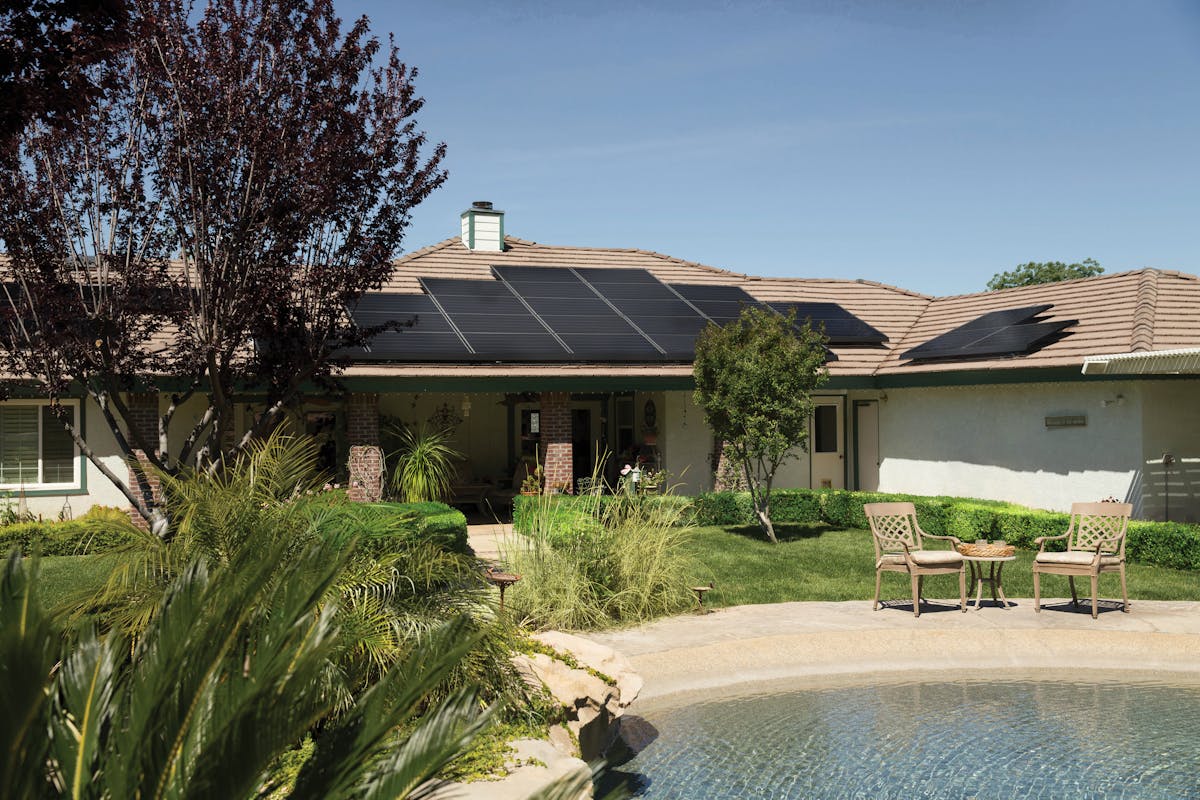
Church Stretton, Ludlow, Much Wenlock and Bishop's Castle attract high-income buyers seeking rural lifestyle properties. These large detached homes — often converted farmhouses — are ideal for 6–10kW systems with 15–20kWh battery storage. Oil central heating remains common in rural Shropshire, making the solar + heat pump + battery combination particularly compelling: eliminating oil costs alongside electricity generation creates payback periods well under a decade.
Stoke-on-Trent: The Potteries Transforms
Stoke-on-Trent's six towns — Burslem, Fenton, Hanley, Longton, Stoke and Tunstall — have a distinctive housing stock shaped by the Victorian ceramics industry. The classic Potteries terrace: two-up two-down, often with a south-facing rear, clay tile roof, and relatively modest roof space. For terraced homes, 3–4 panels (generating 1–1.5kW) can still meaningfully offset bills. End-of-terrace and semi-detached properties in areas like Trentham, Meir and Lightwood accommodate full 10–12 panel systems.
Stoke-on-Trent City Council has ambitious net-zero targets and participates in ECO4 with an active local authority referral pathway. Given the relatively high levels of fuel poverty in parts of the city, the ECO4 LA Flex route is particularly important here — households not on qualifying benefits but in EPC D or below properties can be referred by the council for free or subsidised solar.
Newcastle-under-Lyme, adjacent to Stoke, has a more affluent suburban profile — Westlands, Silverdale and Keele are home to university staff and professionals who are often early solar adopters. The borough's rural fringe, including Stone and Eccleshall, mirrors south Shropshire in having large rural properties well-suited to premium systems.
Costs and Returns Across the Region
Installation costs in Shropshire and Stoke in 2026: a 4kW system runs £6,500–£8,500, a 6kW system £8,500–£11,500. Battery storage (10kWh) adds £4,000–£6,500. For rural Shropshire properties with oil heating, replacing oil with a heat pump (£10,000–£15,000 after the £7,500 Boiler Upgrade Scheme grant) combined with solar and battery can reduce annual energy spend from £3,500–£5,000 to under £800.
Planning Considerations
Shropshire Council covers most of the county (Shrewsbury and Telford and Wrekin are separate authorities). The Shropshire Hills AONB covers a significant swath of south and east Shropshire — solar on properties within the AONB requires additional planning consideration, though the planning inspectorate's guidance treats solar favourably even in protected landscapes when installations are well-designed and unobtrusive. Listed buildings in the county (numerous, given its medieval heritage) require listed building consent for any solar works.
Ready to Go Solar?
Get a free, no-obligation survey and see how much you could save with solar panels.